
SGS Stapling Technology for Sleeve Gastrectomy in Dubai
Sleeve gastrectomy is a widely used bariatric procedure for people who need surgical support for long-term weight management. As surgical techniques continue to evolve, newer technologies are being introduced to refine different stages of the procedure.
SGS Single-Fire Stapling Technology is one such advancement. Dr. Girish Kumar Juneja offers this technology for selected sleeve gastrectomy procedures in Dubai, providing suitable patients with an alternative approach to conventional stapling techniques.
The technology uses a single-fire stapling system to create the stomach staple line during sleeve gastrectomy. Whether this approach is suitable for you depends on factors such as your anatomy, medical history, BMI and overall health.
What Is SGS Single-Fire Stapling Technology?
SGS, or Single-Fire Stapling Technology, is a surgical stapling approach used during sleeve gastrectomy.
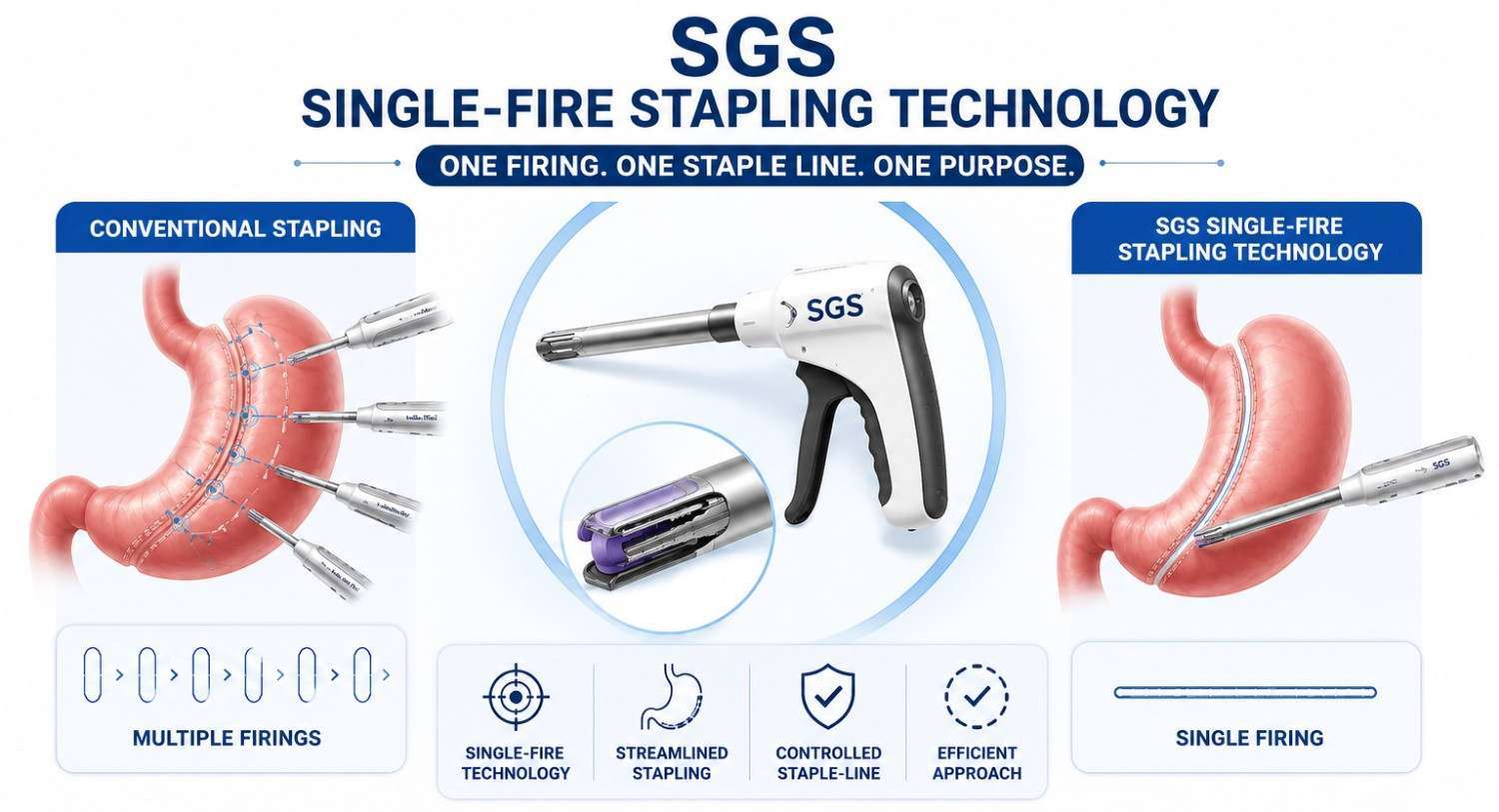
In a conventional sleeve gastrectomy, the surgeon generally uses multiple staple firings to divide and reshape the stomach. The SGS system is designed to create the planned staple line with a single firing.
The purpose of sleeve gastrectomy remains unchanged. The stomach is reduced in size to help limit food intake and support long-term weight management.
The main difference lies in the stapling technique used during the operation, rather than in the overall goal of the sleeve gastrectomy procedure.
What Makes Single-Fire Stapling Different?
The defining feature of SGS is its single-fire approach.
A conventional stapling technique may require several sequential firings to complete the stomach staple line. The SGS system is designed to accomplish this stage with one firing.
Potential advantages of this approach may include:
Single-Fire Stapling
The system is designed to create the planned stomach staple line with a single firing.
Streamlined Stapling
Using one firing may simplify an important stage of the sleeve gastrectomy procedure and potentially make the surgical process more efficient.
Controlled Staple-Line Formation
The system is designed to provide controlled compression and staple formation along the intended staple line.
Minimally Invasive Surgery
When sleeve gastrectomy is performed laparoscopically, small abdominal incisions are used instead of traditional open surgery.
The actual benefits of SGS can vary between patients, and the technology does not eliminate the risks associated with bariatric surgery.
SGS Stapling Technology in Dubai
Patients considering sleeve gastrectomy in Dubai can discuss SGS Single-Fire Stapling Technology as one of the available surgical approaches.
Dr. Girish Kumar Juneja is trained in the use of the Teleflex Titan SGS™ stapling system and has shared his experience with single-fire stapling techniques at professional surgical meetings.
However, choosing a surgical technique is not simply about selecting the latest technology. The approach needs to be appropriate for the patient’s anatomy, health and treatment goals.
During your consultation, Dr. Girish Juneja can evaluate your individual circumstances and discuss whether SGS stapling is suitable for your sleeve gastrectomy.
What Happens During an SGS Sleeve Gastrectomy?
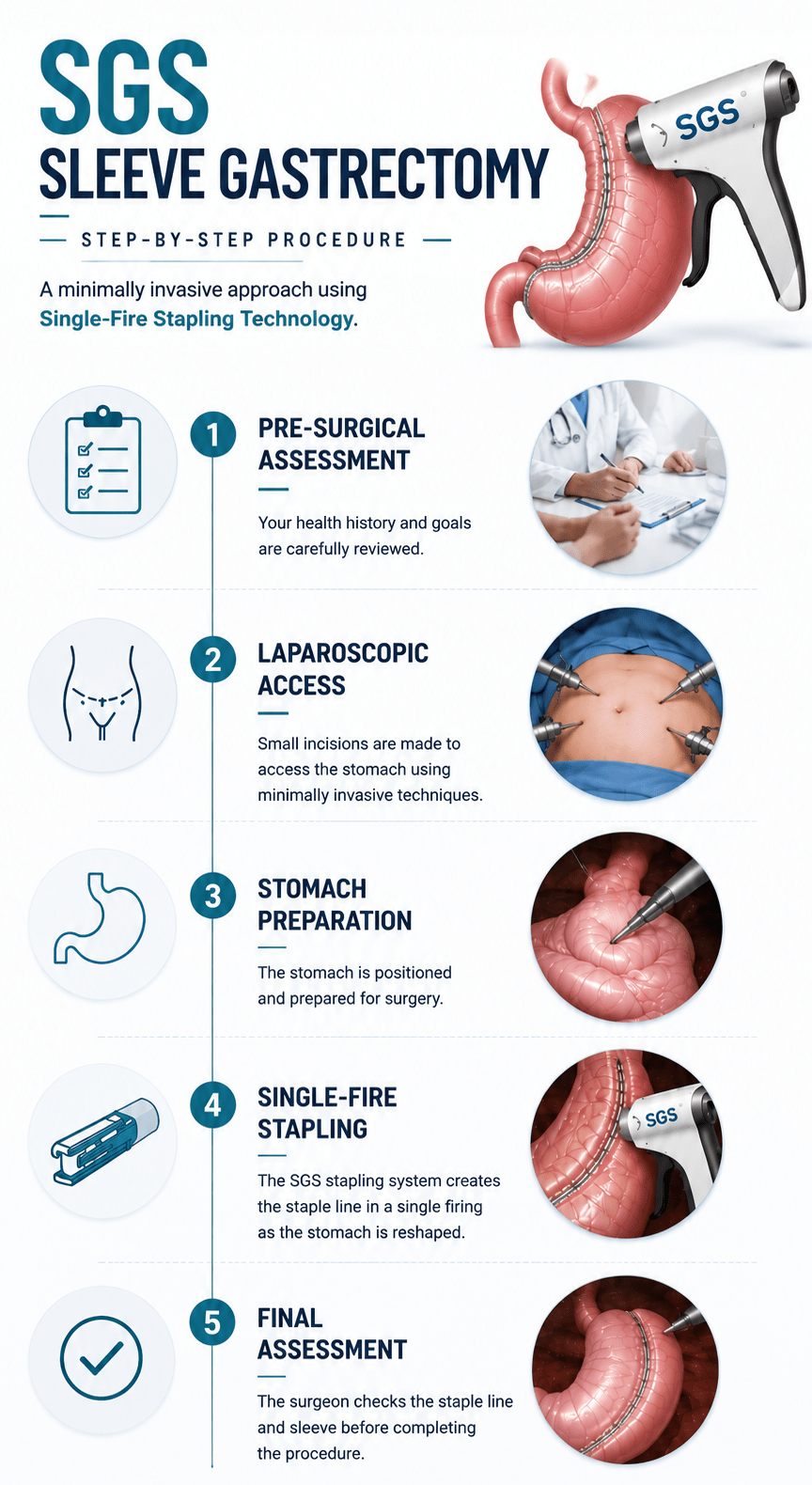
An SGS sleeve gastrectomy follows the basic principles of laparoscopic sleeve surgery, with the single-fire stapling system used during the stomach-reshaping stage.
1. Pre-Surgical Assessment
Your BMI, medical history, existing health conditions and previous weight-loss efforts are reviewed to determine whether sleeve gastrectomy is appropriate for you.
2. Laparoscopic Access
The surgeon makes small incisions in the abdomen to access the stomach using minimally invasive surgical techniques.
3. Stomach Preparation
The stomach is carefully positioned and prepared for the creation of the sleeve.
4. Single-Fire Stapling
The SGS stapling system is used to create the planned staple line as the stomach is reshaped into a smaller sleeve.
5. Final Assessment
The surgeon checks the newly created sleeve and staple line before completing the procedure.
The exact surgical approach can vary based on your anatomy, medical history and individual needs. Your surgeon will explain the procedure and what to expect during your consultation.
Who May Be Suitable for SGS Stapling?
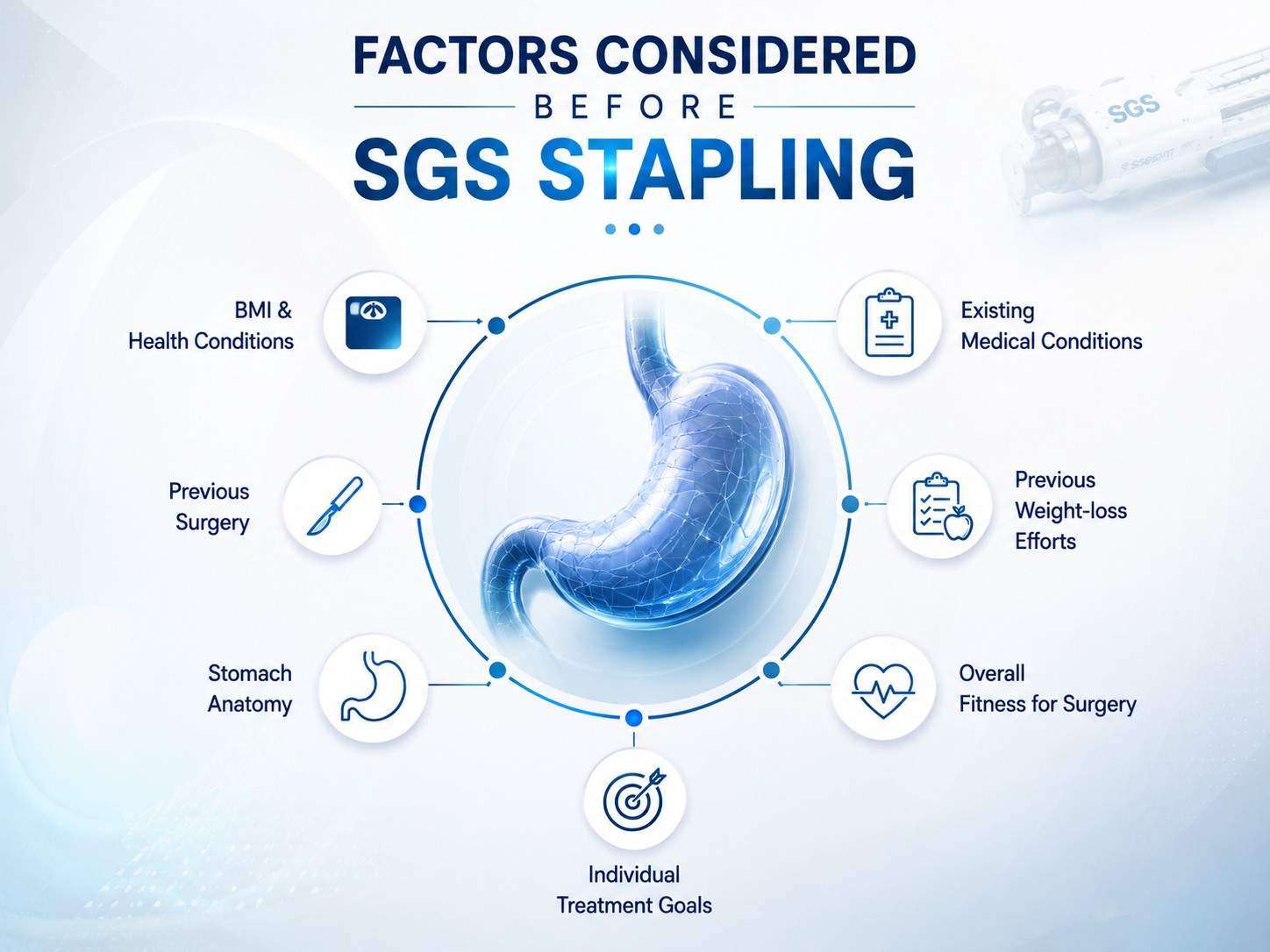
SGS stapling is not suitable for every patient undergoing sleeve gastrectomy. The surgeon assesses whether this approach is appropriate based on your individual health and surgical needs.
Factors that may be considered include:
- Your BMI and weight-related health conditions
- Previous abdominal or bariatric surgery
- Your stomach anatomy
- Existing medical conditions
- Previous weight-management efforts
- Overall fitness for surgery
- Your individual treatment goals
A detailed consultation is important before deciding whether sleeve gastrectomy with SGS stapling is the right option for you. Dr. Girish Juneja can discuss the potential benefits, limitations and alternatives based on your individual circumstances.
A New Approach to Sleeve Gastrectomy in Dubai
SGS Single-Fire Stapling Technology offers another approach to the stapling stage of sleeve gastrectomy.
For Dr. Girish Kumar Juneja, newer technology is valuable when it provides an appropriate option for the right patient. With more than 30 years of surgical experience, he evaluates each patient’s health, anatomy and weight-management goals before recommending a treatment approach.
If you are considering sleeve gastrectomy with SGS stapling, a consultation can help you understand whether this technique is appropriate for you.
Considering SGS Sleeve Gastrectomy in Dubai?
If you are considering sleeve gastrectomy and want to know whether SGS Single-Fire Stapling Technology is suitable for you, discuss your options with Dr. Girish Kumar Juneja.
Frequently Asked Questions About SGS Stapling
SGS, or Single-Fire Stapling Technology, is a surgical stapling approach designed to create the planned stomach staple line with a single firing during sleeve gastrectomy.
The main difference is the stapling technique. Conventional sleeve gastrectomy may involve multiple staple firings, while the SGS system is designed to create the planned staple line with a single firing.
SGS stapling is used as part of sleeve gastrectomy in selected patients. As with any bariatric surgery, there are potential risks, and the suitability and safety of the technique depend on the patient’s health, anatomy and surgical assessment.
Suitability depends on factors such as BMI, weight-related health conditions, previous surgery, stomach anatomy, previous weight-loss efforts and overall fitness for surgery. A bariatric surgeon must assess each patient individually.
The cost of sleeve gastrectomy in Dubai varies depending on the hospital, surgeon, medical requirements and what is included in the treatment package. Published Dubai prices currently vary considerably, so the exact cost is usually confirmed after consultation and assessment.