
Mini gastric bypass in Dubai
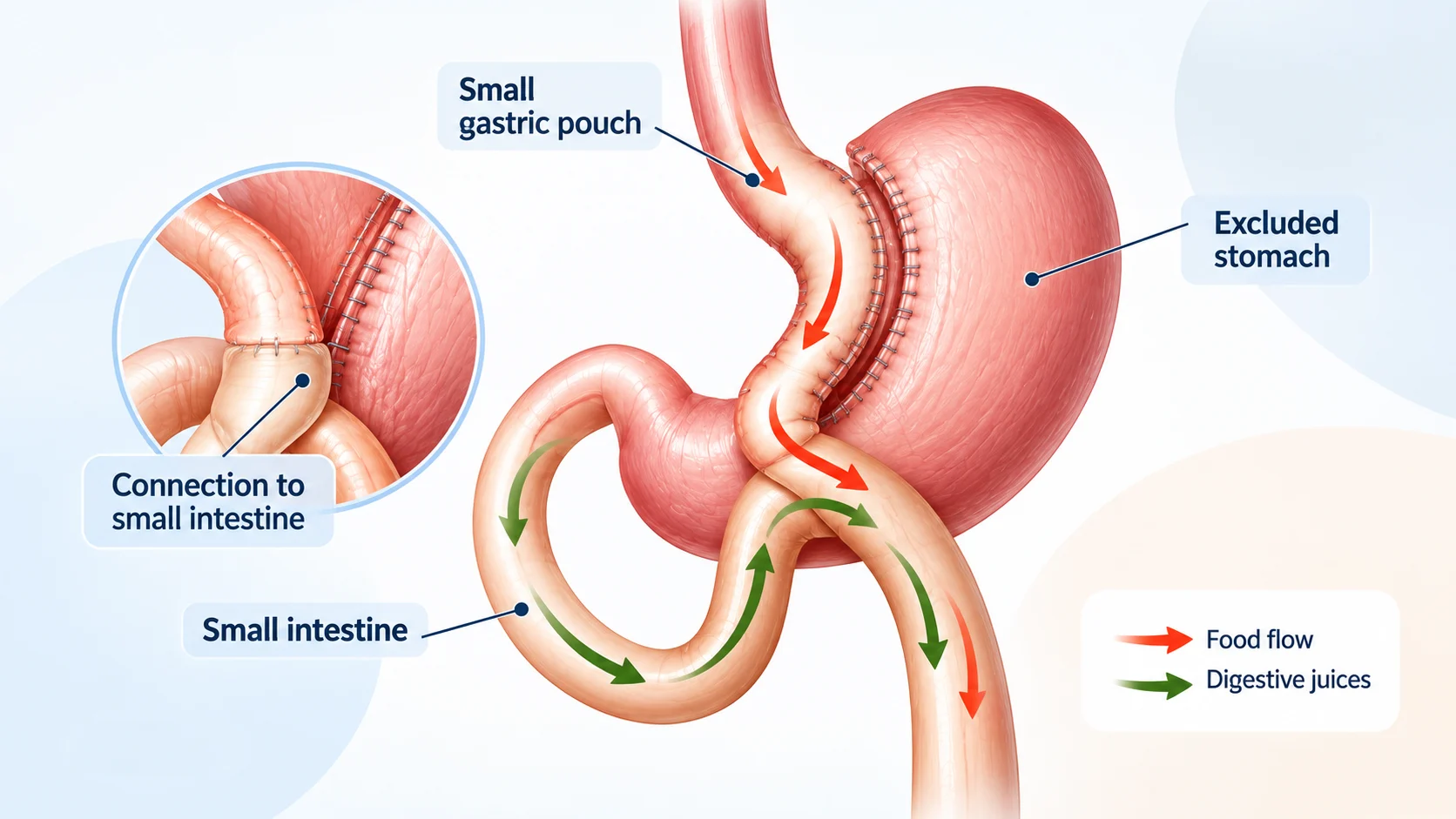
Mini gastric bypass (MGB), also called one anastomosis gastric bypass (OAGB), is a recognised bariatric (weight loss) operation. It is performed laparoscopically (keyhole) and works by reducing the size of the stomach and changing how food passes through the digestive tract.
This page explains what OAGB surgery in Dubai involves, who may be considered for it, the possible risks, what affects the cost, and what recovery and eating look like afterwards, so you can have an informed conversation with your surgeon. Weight loss surgery in Dubai is a major decision and is suitable only after a full medical assessment.
Mini gastric bypass at a glance
- Type of operation: restrictive and malabsorptive weight loss surgery
- Approach: laparoscopic (keyhole) surgery under general anaesthetic
- Hospital stay: usually around two nights
- Intestinal connections: one (Roux-en-Y bypass has two)
- Aftercare: lifelong vitamin supplements, regular blood tests and follow-up
- Consultations in Dubai: Trellis Hospital (Umm Suqeim) and Clemenceau Medical Center (Dubai Healthcare City)
What is mini gastric bypass?
In this operation, the surgeon:
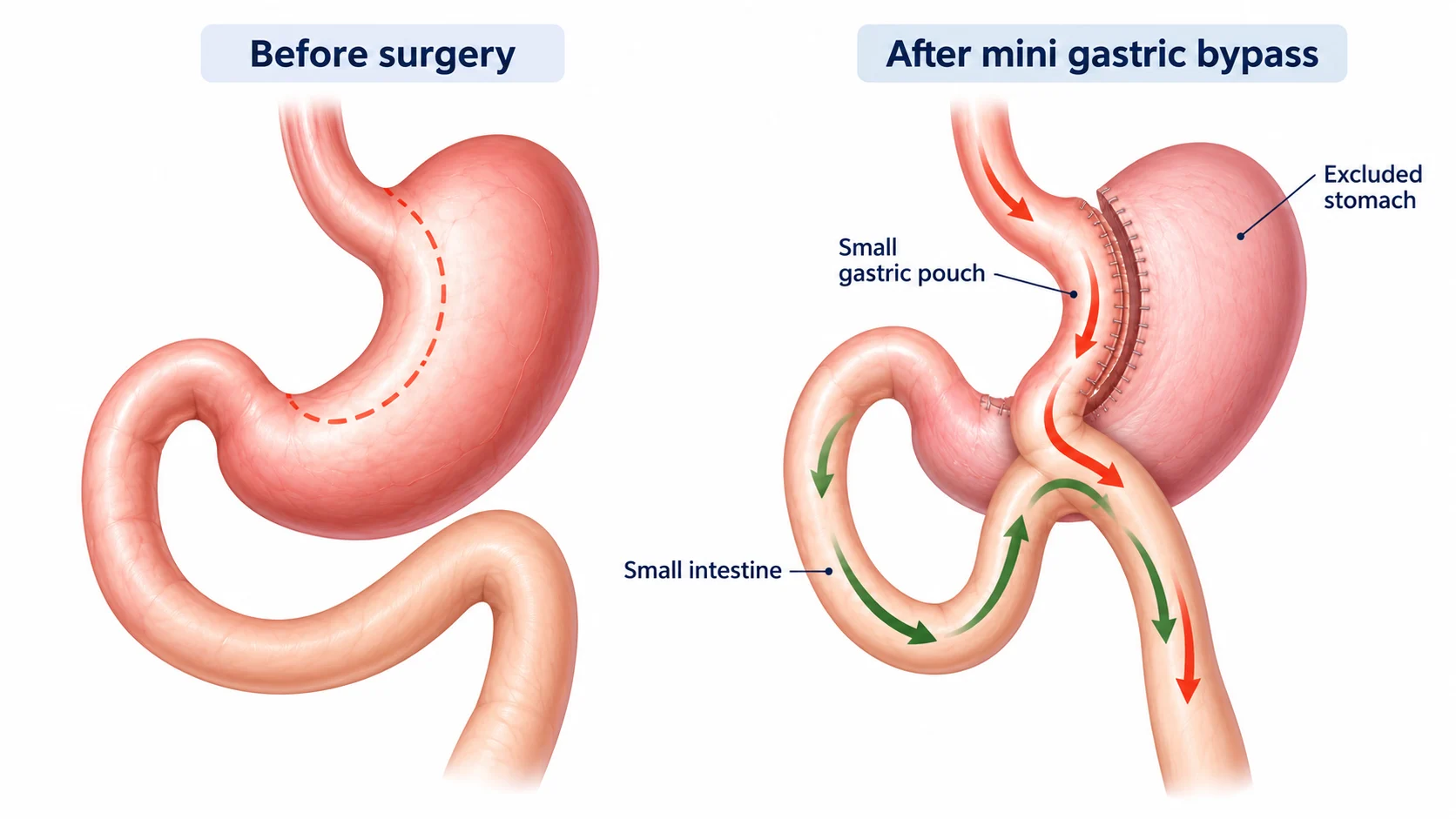
- Creates a long, narrow stomach pouch, which limits how much you can eat at one time.
- Connects this pouch to a loop of the small intestine, bypassing a portion of the intestine.
Because the pouch is smaller and part of the intestine is bypassed, the operation works in two ways:
- Restriction: you feel full on smaller portions.
- Reduced absorption and hormonal changes: changes in gut hormones affect hunger, fullness and blood sugar control.
Compared with a Roux-en-Y gastric bypass, mini gastric bypass has one connection (anastomosis) instead of two, which can make the operation shorter. Your surgeon will explain which technique suits your anatomy and health.
Who may be considered for mini gastric bypass?
Eligibility is decided individually after assessment. International guidance (including IFSO and ASMBS) considers bariatric surgery for adults with:
- BMI of 35 or above, with or without obesity-related conditions
- BMI of 30 to 34.9 with obesity-related conditions such as type 2 diabetes or metabolic syndrome, particularly where lifestyle changes and medical treatment have not been enough
For people of Asian descent, guidelines (including the IFSO Asia-Pacific consensus) support lower BMI thresholds, because health risks can appear at a lower BMI. Your surgeon will advise how this applies to you.
Before surgery you can expect:
- A medical review and blood tests
- Assessment of conditions such as diabetes, sleep apnoea, high blood pressure and fatty liver
- Dietitian input and psychological screening where appropriate
- A discussion of alternatives, including sleeve gastrectomy, Roux-en-Y gastric bypass, endoscopic sleeve gastroplasty, medical weight loss injections and other non-surgical options
Health conditions that may improve after weight loss surgery
Weight loss after bariatric surgery is associated with improvement in several obesity-related conditions, including:
- Type 2 diabetes (many people see improved blood sugar control, and some achieve remission)
- High blood pressure
- High cholesterol
- Obstructive sleep apnoea
- Joint and back pain
- PCOS-related symptoms
Results vary from person to person and depend on your starting health, how long you have had a condition, and how closely you follow medical and dietary advice. There is no guarantee of any particular amount of weight loss or of resolution of any condition.

Possible benefits of the mini gastric bypass technique
- Shorter operating time in many cases
- Fewer intestinal connections than Roux-en-Y gastric bypass
- Performed laparoscopically, usually through small incisions
- A short hospital stay
- Revision or conversion may be possible in suitable patients if needed
Risks and complications after mini gastric bypass
Every operation carries risk, and your surgeon will discuss these in detail before you decide. Possible risks of mini gastric bypass include:
General surgical risks
- Bleeding, infection, blood clots (DVT/PE), anaesthetic complications
- Leak at the surgical joins
- Hernia
Risks specific to gastric bypass procedures
- Bile or acid reflux. Long-term bile reflux after OAGB is an area of ongoing discussion among surgeons, and your surgeon will explain how it applies to you.
- Marginal (anastomotic) ulcer
- Dumping syndrome (nausea, sweating, dizziness, diarrhoea after certain foods)
- Narrowing (stricture) of the connection
- Gallstones, which are more common during rapid weight loss
- Nutritional deficiencies (iron, vitamin B12, calcium, vitamin D, protein), which is why lifelong supplements and regular blood tests are needed
- Temporary hair thinning during the months of fastest weight loss
- Excess loose skin after weight loss
- Weight regain if eating and lifestyle habits are not maintained
Some people may need further treatment or a second procedure. Serious complications are uncommon but can occur.
Eating and drinking after mini gastric bypass in Dubai
Your dietitian will give you a plan that suits you. General principles include:
- Progress in stages: liquids first, then pureed, then soft foods, then regular textures, as advised.
- Stay hydrated: aim for about 2 litres (64 oz) of fluid a day unless told otherwise, sipped slowly through the day.
- Separate drinks from meals: avoid drinking for about 30 minutes before and after eating.
- Eat slowly and chew thoroughly to reduce nausea, vomiting and dumping symptoms.
- Prioritise protein such as lean meat, fish, eggs, dairy and legumes.
- Limit sugary, fried and high-fat foods, which can trigger dumping.
- Avoid alcohol, and limit caffeine and fizzy drinks.
- Take vitamin and mineral supplements exactly as prescribed, for life.
Read more: Diet after mini gastric bypass: a stage-by-stage guide.
Eating and drinking after mini gastric bypass in Dubai
Mini gastric bypass | Sleeve gastrectomy | Roux-en-Y gastric bypass | |
|---|---|---|---|
How it works | Narrow pouch plus one intestinal connection | Stomach reduced in size, no intestinal rerouting | Small pouch plus two intestinal connections |
Intestinal connections | 1 | 0 | 2 |
Lifelong supplements | Yes | Advised | Yes |
Reflux considerations | Bile or acid reflux possible | Reflux can appear or worsen | Bile reflux less likely |
The right procedure depends on your BMI, health conditions, eating patterns and preferences. This is a general comparison only. Read more: Mini gastric bypass vs gastric sleeve.
Mini gastric bypass cost in Dubai
People often ask about gastric bypass cost in Dubai. There is no single fixed price, because the total depends on your individual case. Factors that affect the overall cost include:
- The hospital and type of room chosen, and the length of stay
- Your pre-operative tests, assessments and any additional investigations
- Surgeon, anaesthetic and operating theatre fees
- Whether you have a first-time operation or a revision procedure
- Follow-up appointments, dietitian reviews, blood tests and supplements after surgery
- Whether your insurance provides any cover for bariatric surgery, which varies by plan and is worth confirming with your insurer in advance
After your consultation and assessment, you will receive a clear written estimate that explains what is and is not included. To discuss costs for your situation, call, WhatsApp or email using the details below.
Conclusion: is mini gastric bypass right for you?
Mini gastric bypass (OAGB) is an established weight loss operation that can help suitable patients lose weight and improve obesity-related conditions such as type 2 diabetes. It also carries real risks and needs lifelong follow-up, vitamin supplements and regular blood tests.
Whether it is the right choice depends on your BMI, your health, your eating habits and your goals. The only way to know is a personal assessment with an experienced bariatric surgeon, who can also compare mini gastric bypass with sleeve gastrectomy, Roux-en-Y gastric bypass and non-surgical options.
Book your mini gastric bypass consultation in Dubai
Dr Girish Juneja consults at Trellis Hospital (Umm Suqeim) and Clemenceau Medical Center (Dubai Healthcare City). Your first visit covers your medical history, your questions, your options and what the cost would involve, with no obligation to proceed.
Call: +971 50 454 3775 | WhatsApp: +971 50 454 3775 | Email: askdrgirish@gmail.com
Medical disclaimer & References
General information only, not medical advice. Suitability is decided after assessment by a licensed physician. All surgery carries risk, and no outcome is guaranteed. Last medically reviewed: 13 October 2026 by Dr Girish Juneja.
References
- Eisenberg D, et al. ASMBS/IFSO indications for metabolic and bariatric surgery.
- De Luca M, et al. IFSO position statement on primary and revisional OAGB.
- Schauer PR, et al. Bariatric surgery vs intensive medical therapy for diabetes: 5-year outcomes.
- ACOG. Practice Bulletin 105: Bariatric surgery and pregnancy.
