
Laparoscopic Hernia Surgery in Dubai
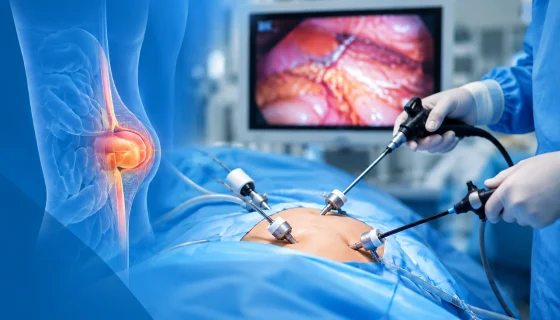
A lump in the groin. A swelling around the belly button. Discomfort when coughing, lifting or exercising.
A hernia can begin with mild symptoms, but a persistent bulge or increasing discomfort should be medically assessed rather than ignored. The right treatment depends on the type of hernia, its size and location, your symptoms, previous surgery and overall health.
Laparoscopic hernia surgery in Dubai is a minimally invasive approach used to repair selected groin and abdominal wall hernias through small incisions. Depending on the hernia and surgical plan, the weakened area may be reinforced with surgical mesh.
However, laparoscopic surgery is not automatically suitable for everyone. A personalised assessment is important to determine whether surgery is needed and which repair is appropriate.
Dr. Girish Juneja is a general, laparoscopic and robotic surgeon in Dubai with more than 30 years of surgical experience. His current professional profile includes laparoscopic hernia surgery among his areas of practice.
What is a Hernia?
A hernia occurs when tissue from inside the abdomen pushes through a weakened area of the abdominal wall.
You may notice a bulge that becomes more prominent when standing, coughing, straining or lifting. Some hernias cause little discomfort, while others may lead to:
- Groin or abdominal pain
- Pressure or heaviness
- Discomfort during physical activity
- A progressively noticeable swelling
- Difficulty with certain everyday activities
A clinical examination is usually an important part of diagnosis. Ultrasound or other imaging may be recommended when the diagnosis is uncertain or further information is needed.
What are the types of Hernia?
Inguinal Hernia
An inguinal hernia develops in the groin and is one of the most common abdominal wall hernias. For suitable patients, laparoscopic repair can be performed using TEP or TAPP techniques.
International HerniaSurge guidelines recognise laparoscopic repair as an established treatment option for appropriately selected groin hernias.
Umbilical Hernia
An umbilical hernia develops around the belly button. Treatment depends on the size of the defect, symptoms and individual factors. Mesh is commonly recommended for appropriate adult repairs to reduce recurrence, although the surgical approach should be individualised.
Incisional and Ventral Hernias
An incisional hernia develops at or near a previous surgical incision, while a ventral hernia occurs through a weakness in the abdominal wall.
The treatment plan depends on the size and location of the defect, previous surgery, symptoms and the condition of the abdominal wall.
Does Every Hernia Need Surgery?
No, a hernia generally does not repair itself, but immediate surgery is not required in every case.
For example, selected men with asymptomatic or minimally symptomatic inguinal hernias may be suitable for watchful waiting following appropriate medical assessment and discussion of the potential risks and benefits. Symptomatic hernias are generally considered for surgical repair.
Surgery may be recommended when a hernia causes persistent symptoms, interferes with daily activities, becomes increasingly difficult to reduce or presents features of a complication.
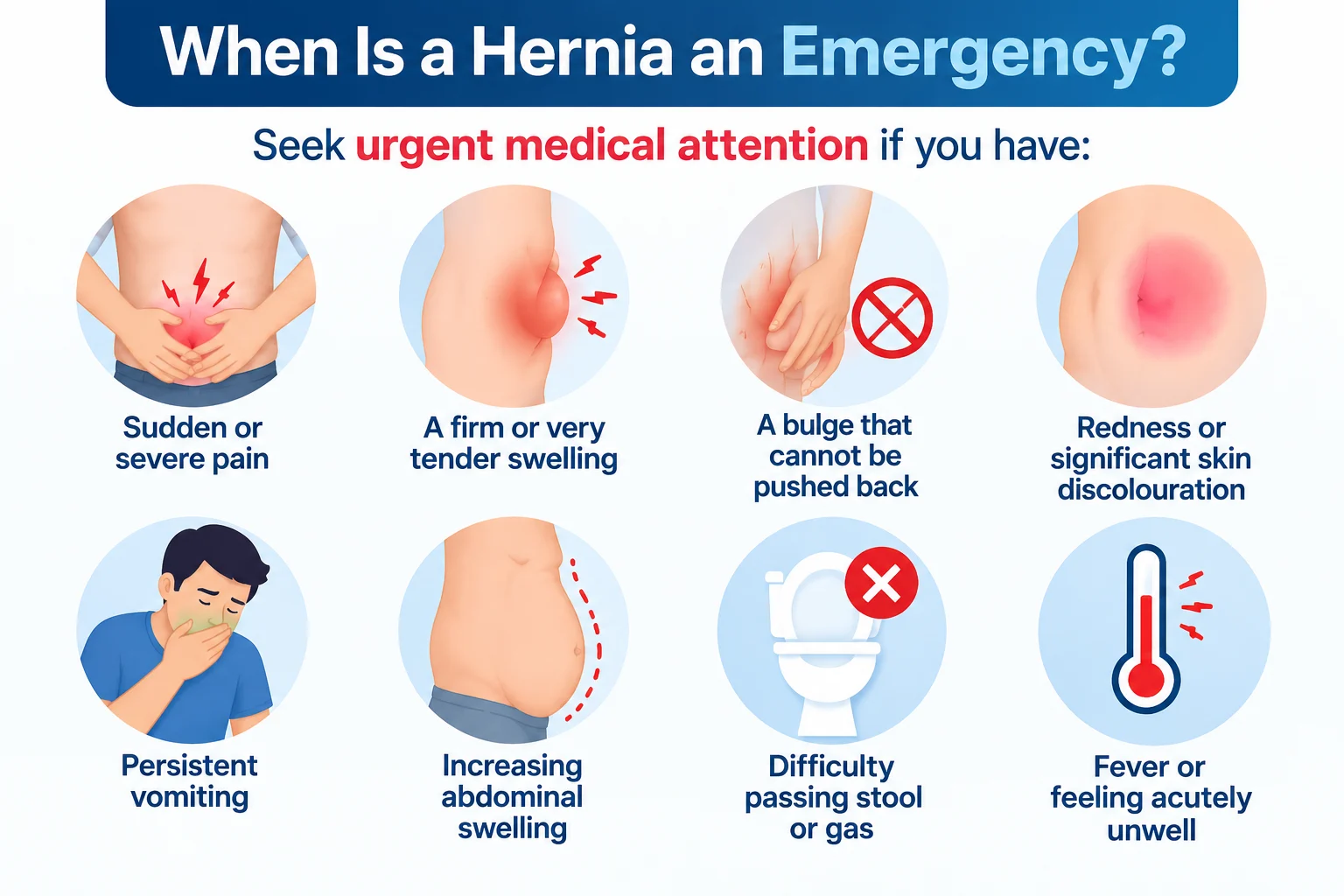
When Is a Hernia an Emergency?
A hernia can occasionally become incarcerated, meaning the protruding tissue becomes trapped. If its blood supply is compromised, this is known as strangulation.
Seek urgent medical attention if you develop:
- Sudden or severe pain
- A firm or very tender swelling
- A bulge that cannot be pushed back
- Redness or significant skin discolouration
- Persistent vomiting
- Increasing abdominal swelling
- Difficulty passing stool or gas
- Fever or feeling acutely unwell
These symptoms require urgent medical assessment.
Laparoscopic Hernia Surgery in Dubai
Laparoscopic hernia repair, also known as keyhole hernia surgery, uses a camera and specialised instruments introduced through small abdominal incisions.
During the procedure, the surgeon identifies the hernia, carefully reduces the protruding tissue and repairs or reinforces the weakened area. Mesh may be used when appropriate to strengthen the repair.
For selected groin hernias, two established laparoscopic approaches are:
TEP Hernia Repair
TEP (Totally Extraperitoneal Repair) accesses the preperitoneal space without intentionally entering the abdominal cavity.
TAPP Hernia Repair
TAPP (Transabdominal Preperitoneal Repair) involves entering the abdominal cavity to reach the preperitoneal space before completing the repair.
Neither technique is universally better. The appropriate approach depends on the patient’s anatomy, hernia characteristics, previous surgery and surgeon expertise. International guidelines support a tailored approach rather than one standard technique for every groin hernia.
Laparoscopic vs Open Hernia Repair
Both laparoscopic and open hernia repair are established surgical techniques.
Laparoscopic repair may offer:
- Smaller incisions
- Less visible scarring
- Reduced early post-operative discomfort in some patients
- Earlier return to normal activities in appropriately selected cases
- An option for some bilateral or recurrent groin hernias
Open repair may be more appropriate for certain large, complex or recurrent hernias, or when individual patient factors make laparoscopy unsuitable.
The aim is not simply to choose the least invasive procedure, but to select the most appropriate and safe repair for the individual patient.
Recovery After Laparoscopic Hernia Surgery
Recovery varies according to the type of hernia, surgical technique, general health and the nature of your work.
After surgery, some soreness, bruising, swelling or temporary discomfort can occur. Walking and gradually increasing normal activity are generally encouraged.
Heavy lifting and strenuous exercise should be resumed according to your surgeon’s advice.
There is no single recovery timeline for every patient. Your surgeon will advise you when it is appropriate to return to work, driving, exercise and heavier physical activity, but usually after one week of surgery you can return to your normal office work.
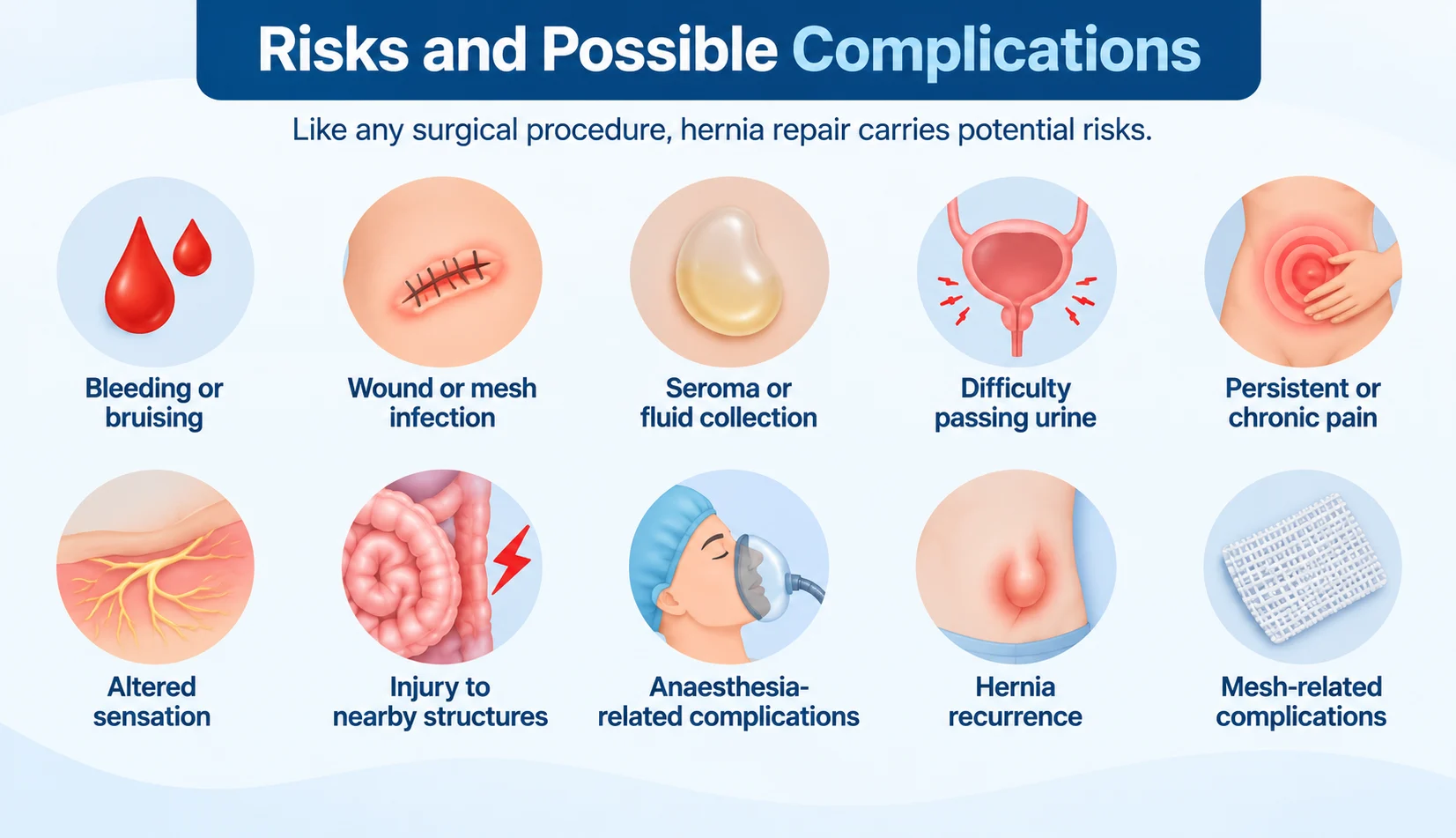
Risks and Possible Complications
Like any surgical procedure, hernia repair carries potential risks.
These may include:
- Bleeding or bruising
- Wound or mesh infection
- Seroma or fluid collection
- Difficulty passing urine
- Persistent or chronic pain
- Altered sensation
- Injury to nearby structures
- Anaesthesia-related complications
- Hernia recurrence
- Mesh-related complications
The likelihood of complications varies between patients and procedures. These risks, along with the expected benefits and alternatives, should be discussed before surgery.
Hernia Treatment in Dubai With Dr. Girish Juneja
Choosing a surgeon for hernia surgery in Dubai involves more than selecting a particular technique.
The repair should be planned according to the patient’s symptoms, hernia characteristics, medical history and individual circumstances.
Dr. Girish Kumar Juneja is a general, laparoscopic and robotic surgeon in Dubai with more than 30 years of surgical experience. His current website lists laparoscopic hernia surgery and treatment of inguinal, umbilical, ventral, incisional and recurrent hernias among his surgical services.
His professional profile also lists EAC-BS Surgeon of Excellence certification.
For patients considering laparoscopic hernia repair, the consultation can help answer three important questions:
Does my hernia require surgery?
Which repair is appropriate for me?
What should I expect during recovery?
Laparoscopic Hernia Surgery Package in Dubai
Dr. Girish Kumar Juneja provides laparoscopic hernia surgery in Dubai using minimally invasive techniques that may offer less post-operative discomfort, smaller scars and quicker recovery compared with open repair.
Package Includes
- Pre-operative anaesthesia consultation & investigations
- Surgeon and operation charges
- Doctor consultation
- In-hospital medications
- Routine laboratory tests
- Standard consumables & implants
- Post-operative follow-up
Package Excludes
- Additional investigations, treatments or procedures
- Medications after hospital discharge
Package inclusions and insurance coverage may vary by case and hospital.

Book a Hernia Consultation in Dubai
If you have persistent groin or abdominal swelling, discomfort during activity or an existing hernia diagnosis, a consultation can help you understand whether treatment is required and which options may be appropriate.
Dr. Girish Juneja
General, Laparoscopic & Robotic Surgeon
Dubai, UAE
Phone / WhatsApp: +971 50 454 3775
Book a consultation to discuss your hernia and appropriate treatment options.
Medical References & Publications
The clinical information on this page is informed by established international hernia guidelines and peer-reviewed medical literature.
- Stabilini C, et al. Update of the international HerniaSurge guidelines for groin hernia management. BJS Open. 2023;7(5):zrad080.
- HerniaSurge Group. International guidelines for groin hernia management. Hernia. 2018;22:1–165.
- Henriksen NA, et al. Guidelines for treatment of umbilical and epigastric hernias from the European Hernia Society and Americas Hernia Society. British Journal of Surgery. 2020;107(3):171–190.
This information is provided for general educational purposes and does not replace an individual medical consultation or diagnosis. Treatment decisions should be based on an assessment by a qualified healthcare professional.