
Magnetic Weight Loss Surgery (MagDI) in Dubai
What Is Magnetic Weight Loss Surgery?
MagDI (Magnetic Duodeno-Ileostomy) is an emerging weight loss and metabolic procedure that uses magnetic compression to create a connection between the duodenum and ileum. This creates an alternative pathway for food through part of the small intestine and may support weight loss and metabolic health.
- Uses two specially designed magnets to compress the intestinal walls.
- Creates a natural intestinal connection without conventional suturing or stapling.
- Performed using a minimally invasive laparoscopic approach.
- Magnets separate and are designed to pass naturally after the connection forms.
- May be performed with or without sleeve gastrectomy.
- Long-term clinical evidence is still developing.
The MagDI Procedure, Step by Step
MagDI surgery creates a new connection between the duodenum and ileum using paired magnets. The magnets gradually compress the tissue between the two intestinal sections, allowing an anastomosis to form without conventional suturing of the connection.
The procedure generally involves:
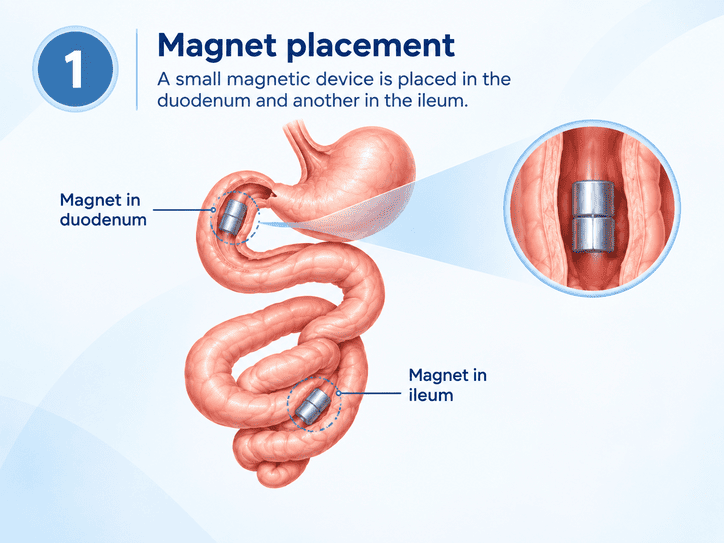
Magnet placement – Magnetic components are positioned in the duodenum and ileum using laparoscopic and endoscopic techniques.
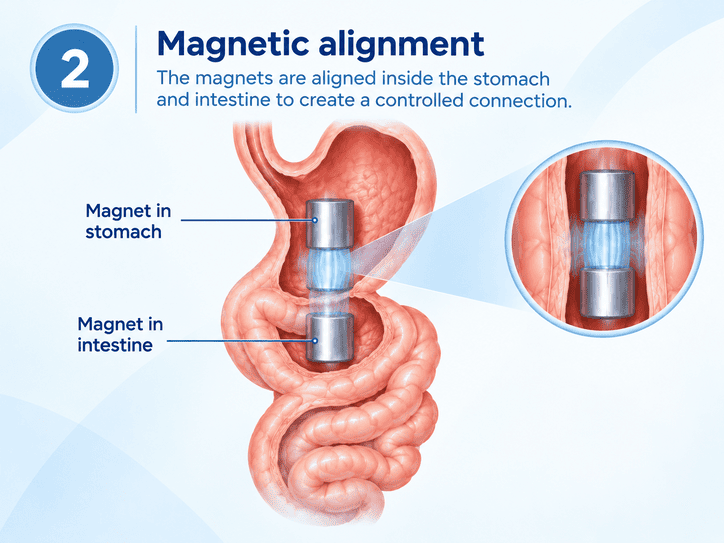
Magnetic alignment – The magnets attract and bring the intestinal walls together.
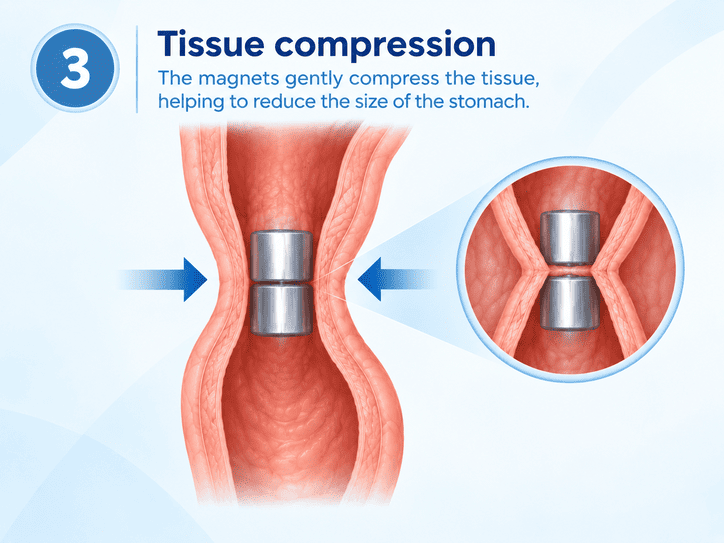
Tissue compression – Continuous magnetic pressure gradually compresses the tissue between them.
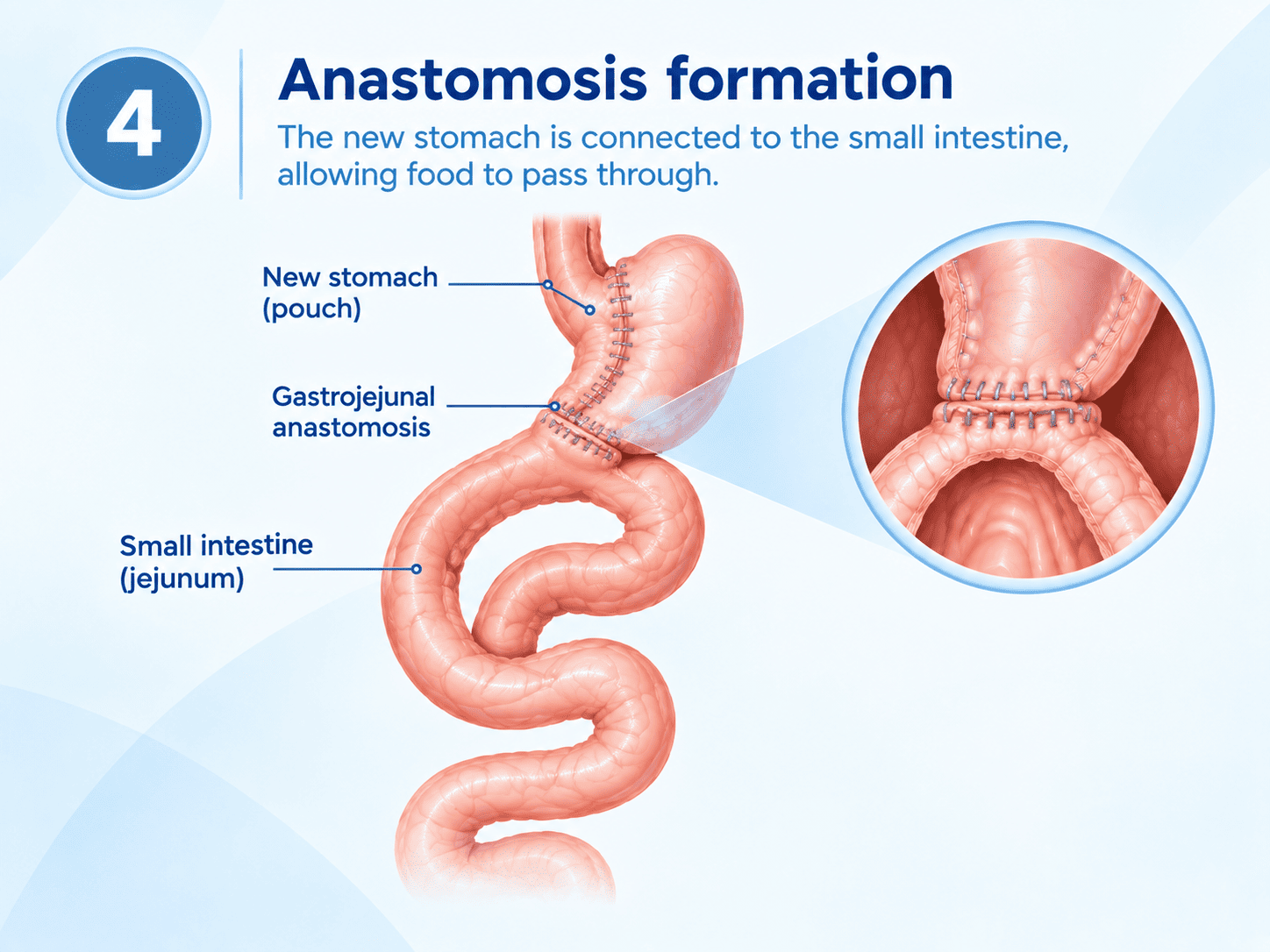
Anastomosis formation – A controlled connection develops between the two intestinal sections.
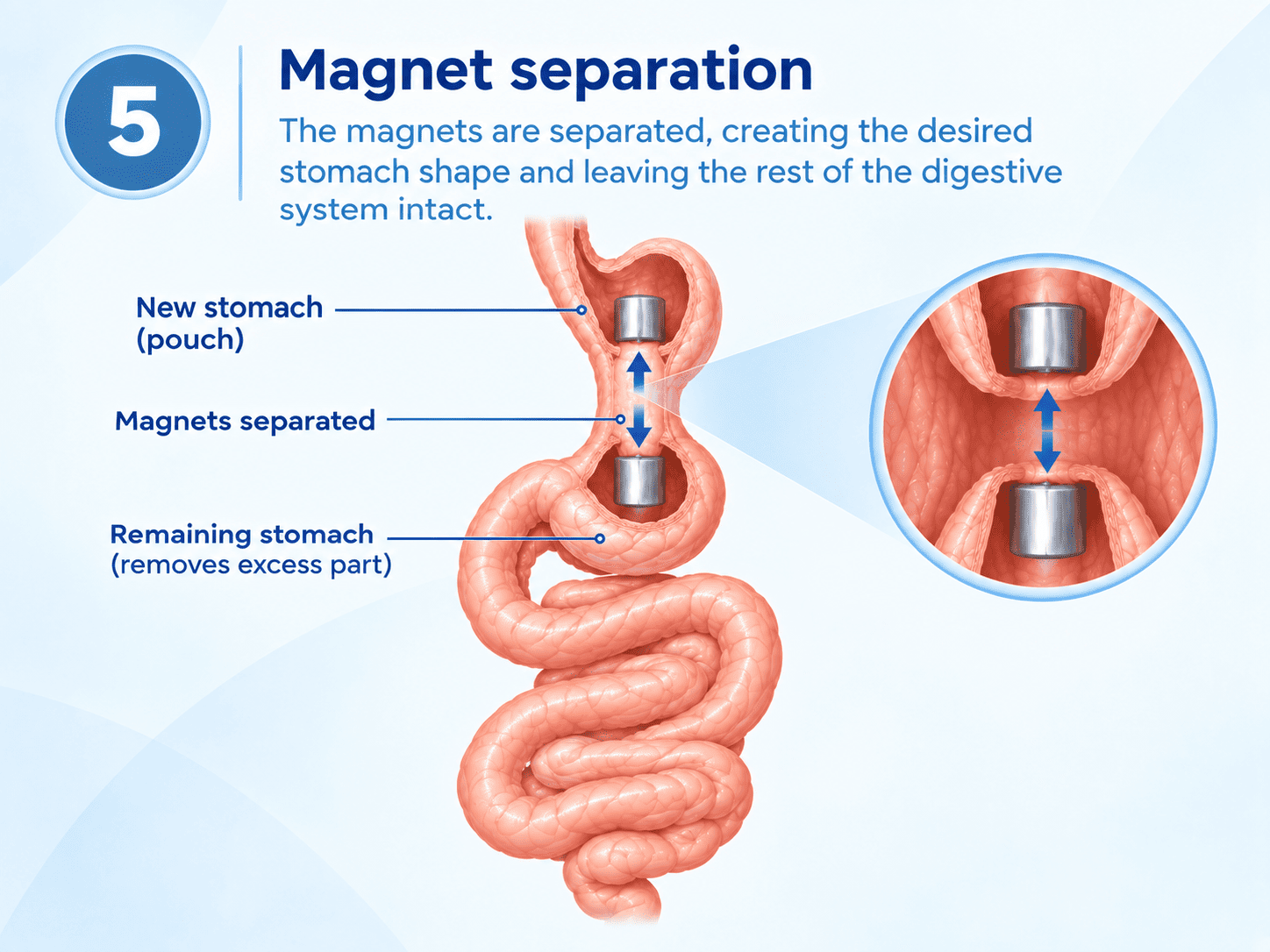
Magnet separation – Once the connection forms, the magnets separate from the tissue.
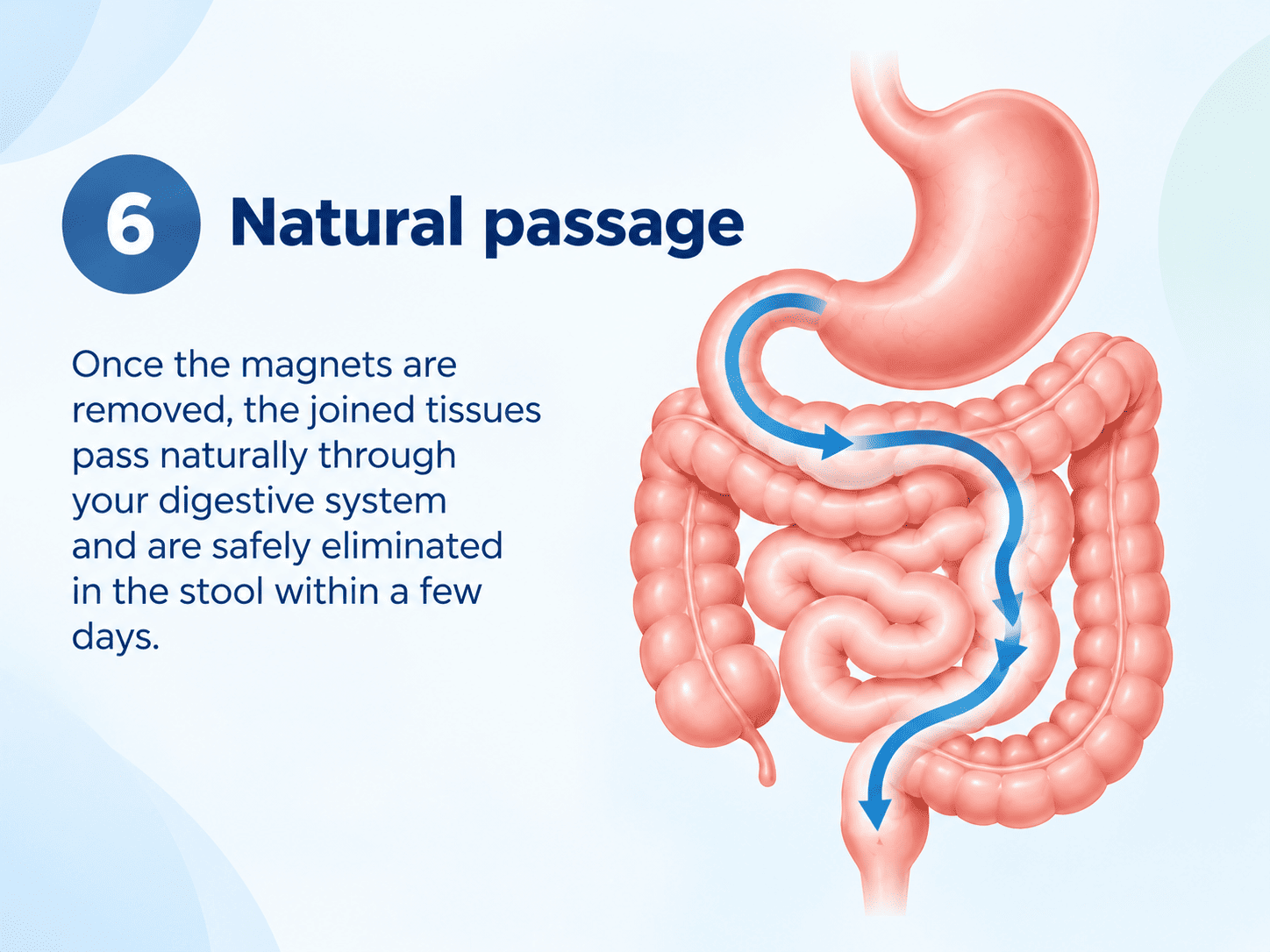
Natural passage — The magnets are designed to pass through the digestive tract naturally, typically within several weeks of placement.
MagDI vs Gastric Sleeve vs Gastric Bypass
MagDI uses magnetic compression to create an intestinal connection, offering a different approach from traditional bariatric surgery. It’s best understood as an alternative technique for creating an intestinal bypass, not a replacement for sleeve gastrectomy or gastric bypass, both of which have a much longer track record.
Feature | MagDI | Gastric Sleeve | Gastric Bypass |
Main Approach | Magnetic intestinal diversion | Removes part of the stomach | Creates a small stomach pouch and intestinal bypass |
Stomach Removal | No | Yes | No |
Intestinal Connection | Created using magnetic compression | No intestinal connection | Created surgically |
Sutures/Staples | Magnetic system used for the anastomosis | Surgical staples | Sutures/staples commonly used |
Effect on Digestion | Diverts part of the intestinal pathway | Primarily restricts stomach capacity and alters hormonal signals | Restricts intake and bypasses part of the intestine |
Metabolic Effects | Potential weight and metabolic benefits | Established metabolic benefits | Established metabolic benefits |
Long-term Evidence | Developing | Extensive | Extensive |
If you’re weighing MagDI against gastric sleeve surgery or gastric bypass surgery, Dr. Girish Juneja can talk through which approach best fits your health history and goals.
Benefits of Magnetic Weight Loss Surgery
Early research suggests MagDI may support meaningful weight loss and improved blood sugar control, though, as with any newer procedure, results and long-term durability are still being studied.
Key potential benefits include:
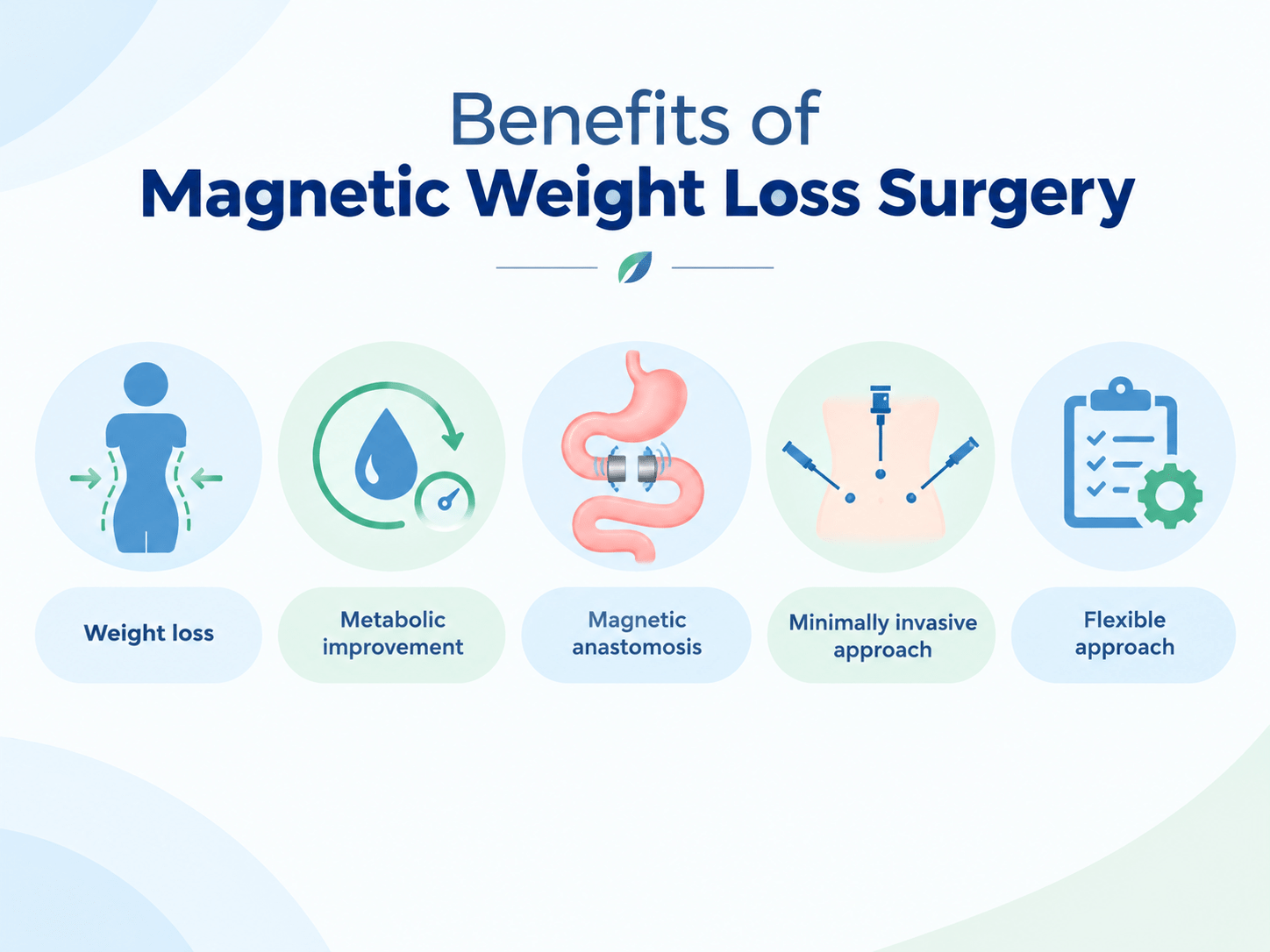
- Weight loss: May support meaningful and sustained weight reduction.
- Metabolic improvement: May help improve blood sugar control in people with type 2 diabetes.
- Magnetic anastomosis: Creates the intestinal connection using magnetic compression rather than conventional suturing.
- Minimally invasive approach: Uses laparoscopic techniques with small incisions.
- Flexible approach: May be performed alone or combined with sleeve gastrectomy, depending on the patient.
Risks and Things to Consider
Like any bariatric procedure, MagDI surgery may involve potential risks and complications. As an emerging technique, its long-term safety and outcomes continue to be evaluated.
Key considerations include:
- Surgical risks: Infection, bleeding, anaesthesia-related complications, or other surgical risks may occur.
- Digestive changes: Changes in bowel habits or digestion may occur after the procedure.
- Individual suitability: MagDI may not be appropriate for every patient and requires a detailed medical assessment.
- Long-term evidence: Clinical research on MagDI is still developing, so long-term outcomes require further evaluation.
- Follow-up care: Regular medical follow-up and adherence to recommended diet and lifestyle changes are important for long-term results.
Am I a Candidate for MagDI?
MagDI may be considered for selected patients with obesity or metabolic conditions after an assessment by a qualified bariatric surgeon. Your suitability may depend on:
If you have experienced inadequate weight loss or significant weight regain after sleeve gastrectomy
Have persistent or recurrent type 2 diabetes or other metabolic concerns
Meet accepted criteria for metabolic or bariatric surgery
Are medically fit for anaesthesia and abdominal surgery
Have not achieved long-term results with diet, exercise, or medical therapy
MagDI may not be appropriate for patients with certain anatomical conditions, gastrointestinal diseases, implanted devices or medical problems that increase surgical risk. Individual assessment is essential.

Recovery and What to Expect
Recovery after Magnetic Weight Loss Surgery (MagDI) varies from patient to patient and may depend on whether the procedure is performed alone or combined with sleeve gastrectomy.
During recovery, patients can generally expect:
- Postoperative monitoring: Your medical team will monitor your recovery and overall condition.
- Gradual diet progression: Your diet will be advanced according to your surgeon’s recommendations.
- Activity guidance: Physical activity can be gradually resumed based on your recovery.
- Follow-up care: Regular follow-up helps monitor weight loss, metabolic health and recovery.
- Lifestyle changes: Long-term results depend on following recommended dietary and lifestyle changes.

Meet the Bariatric Surgery Specialist - Dr. Girish Juneja
Dr. Girish Juneja has practiced bariatric and laparoscopic surgery in Dubai for over two decades and currently consults at Trellis Hospital (Jumeirah) and Clemenceau Hospital Dubai (Healthcare City).
30+
Years as an expert surgeon
1000+
Bariatric Procedures Performed

International Fellow of American Society for Metabolic & Bariatric Surgery (FASMBS)

Member of International Federation for the Surgery of Obesity & Metabolic Disorders (IFSO)
Book Your Magnetic Weight Loss Surgery Consultation in Dubai
Considering Magnetic Weight Loss Surgery (MagDI) in Dubai?
Consult Dr. Girish Kumar Juneja, an experienced bariatric and laparoscopic surgeon, to discuss your weight-loss goals, your suitability for MagDI, and how it compares with other options for your situation. Dr. Girish Juneja consults at Trellis Hospital, Jumeirah, and Clemenceau Medical Centre, Dubai Healthcare City.
The consultation with Dr. Girish Juneja includes:
- Review of your weight and medical/ surgical history
- Assessment of previous treatments
- Discussion of established and newer treatment options
- Clear explanation of expected benefits, uncertainties and risks
- A personalised long-term follow-up
Frequently Asked Questions (FAQs)
No. In MagDI, the term duodeno-ileostomy refers to an internal connection between the duodenum and ileum. It does not normally create an opening on the abdominal wall or require an external bag.
No. The magnets are designed to detach after the intestinal connection has formed and pass naturally through the bowel. Their passage should be confirmed by your surgeon.
No. It is a newer method of creating a particular intestinal connection. Sleeve gastrectomy and gastric bypass remain established operations with substantially more long-term evidence. The appropriate procedure depends on the individual patient.
Yes, it may be considered for selected patients who have experienced inadequate weight loss, weight regain or recurrence of a metabolic condition after sleeve gastrectomy.
In published studies, the magnetic duodeno-ileal connection has been performed alongside sleeve gastrectomy in selected patients. Combining procedures changes the expected benefits, recovery and risks and must be considered individually.
The total cost depends on the hospital, surgical plan, device, preoperative investigations and whether another procedure is performed at the same time. A personalised quotation can be provided after consultation.
Passage usually occurs over several weeks, but timing varies. Imaging may be required to confirm that the magnets have left the body.
Medical References
This article provides general information and does not replace an individual medical consultation. The availability and regulatory status of MagDI may differ by country and healthcare facility.
- Gagner M, Almutlaq L, Cadiere GB, et al. Side-to-side magnetic duodeno-ileostomy in adults with severe obesity with or without type 2 diabetes: early outcomes with prior or concurrent sleeve gastrectomy. Surgery for Obesity and Related Diseases. 2024.
- Gagner M, Almutlaq L, Gnanhoue G, Buchwald JN. Magnetic single-anastomosis side-to-side duodeno-ileostomy for revision of sleeve gastrectomy in adults with severe obesity: one-year outcomes. World Journal of Surgery. 2024;48:2337–2348.
- US Food and Drug Administration. De Novo Classification Request for the MagDI System—DEN240013.
Let’s Get Started
We pride ourselves in offering programs designed in accordance with healthy weight-loss practices. Our staff provides you with professional guidance and behavior modification.
