
Choosing between gastric sleeve and gastric bypass in Dubai involves comparing how each surgery works, expected weight loss, recovery, risks, cost, and suitability. Sleeve surgery reduces stomach size, while bypass also changes digestion. Your BMI, diabetes, acid reflux, health conditions, and weight-loss goals help determine the right option, along with long-term follow-up.
What Is Gastric Sleeve?
Gastric sleeve surgery, also called sleeve gastrectomy, removes a large portion of the stomach. The remaining stomach forms a smaller, tube-shaped pouch.
This reduces the amount of food you can eat at one time. The procedure can also affect hunger-related hormones, which may
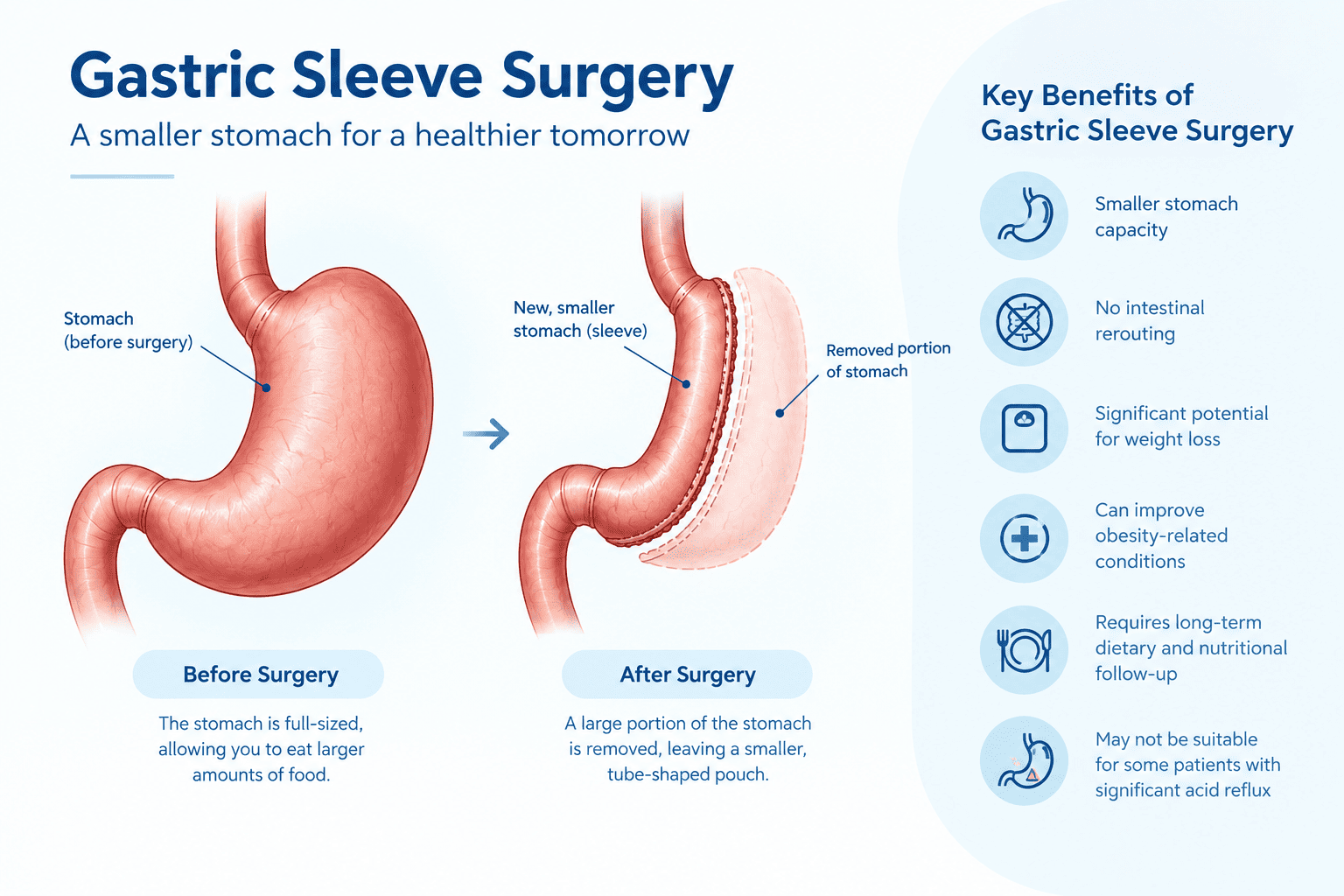
help reduce appetite.
Gastric sleeve at a glance
- Smaller stomach capacity
- No intestinal rerouting
- Significant potential for weight loss
- Can improve obesity-related conditions
- Requires long-term dietary and nutritional follow
-up - May not be suitable for some patients with significant acid reflux
Sleeve gastrectomy in Dubai is a recognised bariatric procedure under the Dubai Health Authority’s bariatric surgery standards. Suitability depends on your BMI, health conditions, and overall medical assessment.
What Is Gastric Bypass?
Gastric bypass surgery creates a small stomach pouch and connects it to a lower section of the small intestine. This reduces food intake and alters the digestive pathway, resulting in metabolic changes and some reduction in nutrient absorption.
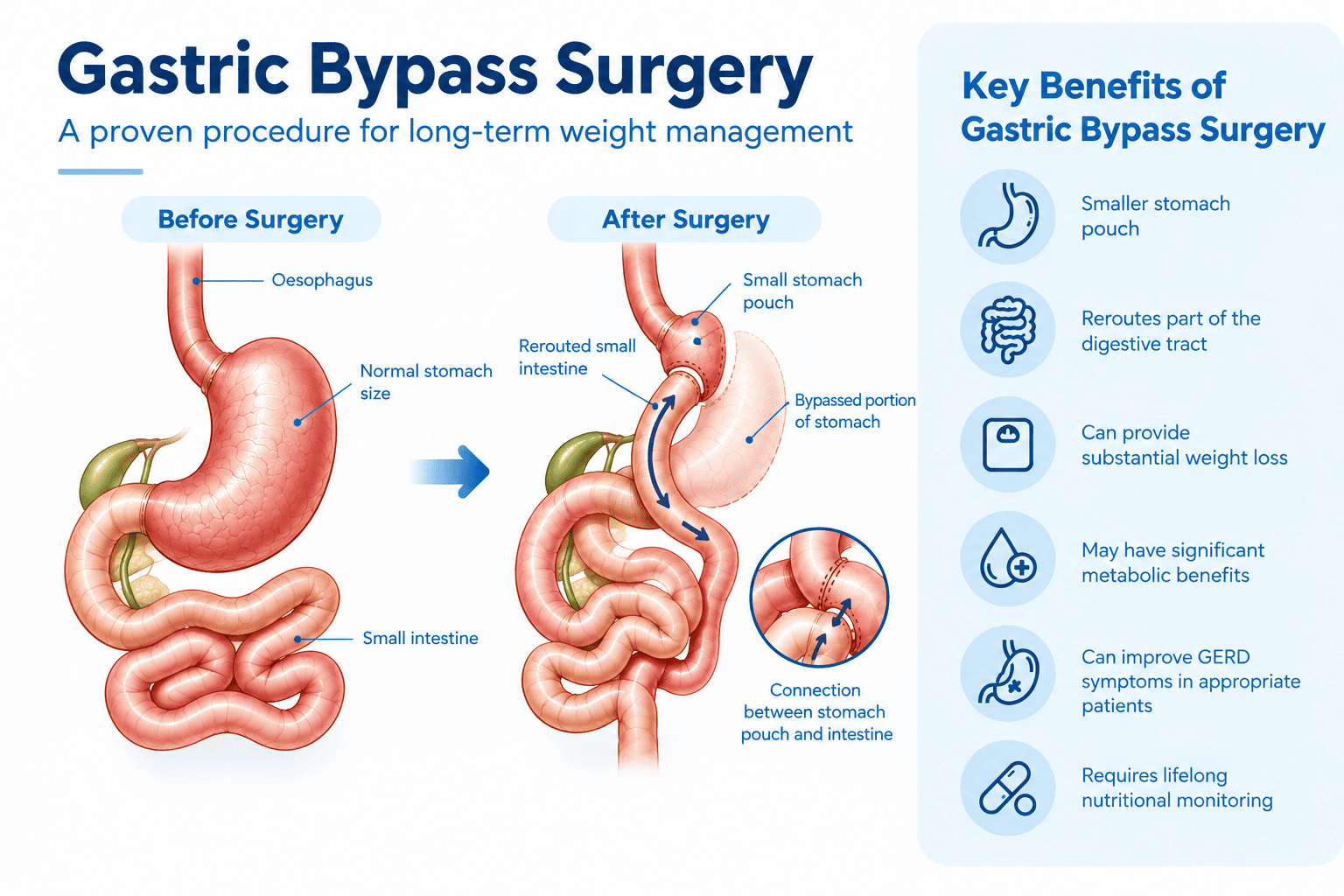
The procedure also produces metabolic and hormonal changes that can contribute to weight loss and improvement in conditions such as type 2 diabetes.
Gastric bypass at a glance
- Creates a smaller stomach pouch
- Reroutes part of the digestive tract
- Can provide substantial weight loss
- May have significant metabolic benefits
- Gastric bypass can improve GERD symptoms in appropriate patients
- Requires lifelong nutritional monitoring
Because bypass changes nutrient absorption, vitamin and mineral supplementation and regular follow-up are particularly important.
Gastric Sleeve vs Gastric Bypass: Key Differences
|
Factor |
Gastric Sleeve |
Gastric Bypass |
|
Procedure |
Removes part of the stomach |
Creates a pouch and reroutes the intestine |
|
Weight loss |
Substantial weight loss; outcomes vary |
Substantial weight loss; outcomes vary |
|
Recovery |
Recovery varies; gradual return to normal activities |
Recovery varies; gradual return to normal activities |
|
Diabetes |
Can improve type 2 diabetes |
Can have a strong metabolic effect and may improve type 2 diabetes |
|
Reflux |
May worsen reflux in some patients |
May improve reflux |
|
Nutrition |
Nutritional monitoring required |
Greater risk of nutritional deficiencies |
|
Digestive changes |
No intestinal bypass |
Intestinal bypass |
Outcomes vary between individuals and studies. Weight-loss percentages should not be treated as guaranteed results.
Which One Is Right for You?
There is no universal answer to whether sleeve or bypass is more suitable. Your surgeon will consider your BMI, medical conditions, medications, eating habits, reflux symptoms and previous weight-loss attempts.
Gastric sleeve may be considered if:
- You need significant weight loss.
- You do not have significant or uncontrolled GERD.
- You prefer a procedure without intestinal rerouting.
- Your overall health profile supports sleeve surgery.
- Your surgeon considers sleeve appropriate after assessment.
Gastric bypass may be considered if:
- You have obesity with poorly controlled type 2 diabetes.
- Significant acid reflux is present.
- A stronger metabolic effect may be beneficial.
- Your medical profile supports bypass.
- You are prepared for long-term nutritional monitoring.
According to the DHA Standards for Bariatric Surgery Services, bariatric surgery may be considered for patients with a BMI of 35 kg/m² or above. Patients with a BMI of 30–34.9 kg/m² may also be considered when they have poorly controlled type 2 diabetes or two obesity-related conditions. Final eligibility is determined after individual clinical assessment.
BMI is an important starting point, but it should not be the only factor used to select a procedure.
Recovery & Daily Life After Surgery
Recovery after either procedure happens gradually. Your diet will usually progress from liquids to soft foods before you return to more regular meals.
Portion sizes remain much smaller after surgery. Eating slowly, following your nutrition plan, and staying adequately hydrated become important parts of daily life.
Regular activity is gradually reintroduced as your surgeon advises.
Long-term follow-up is also essential. Dubai’s bariatric surgery standards include structured post-operative monitoring and nutritional assessment.
Gastric Sleeve vs Gastric Bypass Cost in Dubai
The cost of gastric sleeve and gastric bypass in Dubai can differ because bypass surgery involves a more complex digestive procedure and may have different hospital and follow-up requirements.
Published hospital packages can provide an indication, but your individual quotation may be different.
Typical cost factors include:
- Surgeon and anaesthetist fees
- Hospitalisation
- Surgical consumables
- Pre-operative investigations
- Medications
- Follow-up consultations
- Nutritional support
Insurance coverage also varies. Check whether your policy covers bariatric surgery and whether pre-authorisation is required.
To learn more about the cost of Bariatric Surgery in Dubai, visit the page – Bariatric Surgery Cost in Dubai
What to Expect From Bariatric Care in Dubai
Dubai has established standards for bariatric surgery covering patient selection, pre-operative assessment, surgical facilities and follow-up.
Patients may also consider practical factors such as hospital accreditation, multidisciplinary care, language support and access to post-operative nutritional guidance.
For medical tourists and expat patients, it is useful to clarify how consultations, surgery, accommodation, transport and follow-up appointments will be coordinated before travelling.
Choosing Between Gastric Sleeve and Gastric Bypass
The decision should be based on your health profile rather than weight-loss numbers alone.
A bariatric consultation can help assess your BMI, diabetes status, reflux, nutritional health and previous weight-loss history before discussing the most appropriate procedure.
If you are considering bariatric surgery in Dubai, speak with an experienced bariatric surgeon to understand your options, expected outcomes, risks and long-term follow-up requirements.
Planning Your Bariatric Surgery in Dubai
Gastric sleeve and gastric bypass can both support meaningful weight loss, but they differ in how they affect the stomach, digestion, reflux and nutritional needs. The right procedure depends on your BMI, medical conditions, diabetes, reflux symptoms, previous weight-loss efforts and long-term goals.
If you are considering gastric sleeve or gastric bypass in Dubai, Dr. Girish Juneja can assess your health and discuss the surgical option that may be suitable for you.
Book a consultation with Dr. Girish Juneja to discuss your bariatric surgery options in Dubai and take the next step towards long-term weight management.