
Gastric sleeve surgery is an important step towards managing obesity, but recovery is where many lifestyle changes begin. Your stomach needs time to heal, eating habits change, and everyday activities must be resumed gradually.
A common question patients ask is: How long does gastric sleeve recovery take, and when can I return to my normal routine?
From adjusting to smaller meals to progressing through different food stages, recovery requires patience and consistent care. Understanding what to expect can help you prepare for the changes and recognise when medical attention is needed.
Here is a practical guide to gastric sleeve recovery, including diet, physical activity and important recovery milestones.
What Happens During Gastric Sleeve Recovery?
Sleeve gastrectomy involves removing a large portion of the stomach to create a narrower, sleeve-shaped stomach. Its reduced capacity means you will initially consume much smaller amounts of food and fluids.
During recovery, the main priorities are allowing the stomach to heal, maintaining hydration, meeting protein requirements and gradually returning to everyday activities.
Your gastric sleeve recovery time may vary depending on your health, surgical progress and nutritional needs.
Gastric Sleeve Recovery Timeline: Week by Week
The following timeline outlines common recovery milestones. Diet progression and exercise should depend on medical clearance rather than fixed dates.
Recovery stage | What to expect |
Hospital stay (Day 0–2) | Monitoring, hydration and assisted walking |
Week 1–2 | Liquid diet and gradual movement |
Weeks 3–4 | Possible introduction of puréed and soft foods |
Weeks 5–6 | Greater food variety and increased activity |
Week 7 onwards | Gradual transition towards long-term eating habits |
Hospital Stay: Day 0–2
Immediately after surgery, your medical team monitors your vital signs, pain, nausea and hydration. You may experience mild abdominal discomfort, bloating and tiredness.
Once cleared, you may begin taking small sips of approved liquids. Gentle walking is generally encouraged as soon as your condition permits.
Many patients undergoing uncomplicated laparoscopic sleeve gastrectomy stay in hospital for approximately one to two days, depending on their recovery.
Weeks 1–2: Focus on Healing and Hydration
During the first two weeks, your stomach is healing and adjusting to smaller fluid volumes.
Depending on your surgeon’s protocol, your diet may include:
- Water and approved clear liquids.
- Low-sugar broth.
- Prescribed protein supplements.
- Other smooth liquids recommended by your dietitian.
Take small sips frequently instead of drinking large amounts at once. Continue short walks as tolerated and avoid heavy lifting or strenuous exercise.
Weeks 3–4: Introducing New Food Textures
Depending on your recovery, your bariatric team may allow you to progress from liquids to puréed and subsequently soft foods.
Suitable options, once approved, may include smooth lentils, puréed vegetables, yoghurt, blended lean chicken and soft eggs during the appropriate stage.
Eat slowly, take small portions and stop when comfortably full. Do not introduce solid foods without your dietitian’s approval.
Weeks 5–6: Building Strength and Dietary Variety
Some patients may gradually introduce a wider variety of soft foods and eventually more regular textures.
Continue prioritising protein, eating smaller portions and taking prescribed supplements. Walking can become a more regular part of your routine, while additional exercise should only begin after medical clearance.
Week 7 Onwards: Establishing Long-Term Habits
Your stomach will continue to have a smaller capacity. Focus on balanced meals, protein-rich foods, adequate hydration, prescribed supplements and regular physical activity.
The goal is to establish sustainable habits that support long-term weight management.
Diet After Gastric Sleeve Surgery: What Can You Eat?
Food progression is an important part of recovery. The commonly used stages include:
Diet stage | Food consistency | Examples |
Clear liquids | Transparent fluids | Water, approved broth |
Full liquids | Smooth liquids | Protein drinks, approved yoghurt-based liquids |
Puréed foods | Completely blended | Smooth lentils, puréed vegetables |
Soft foods | Soft and manageable | Eggs, tender fish, cottage cheese |
Regular foods | Gradually introduced balanced foods | Lean protein and vegetables |
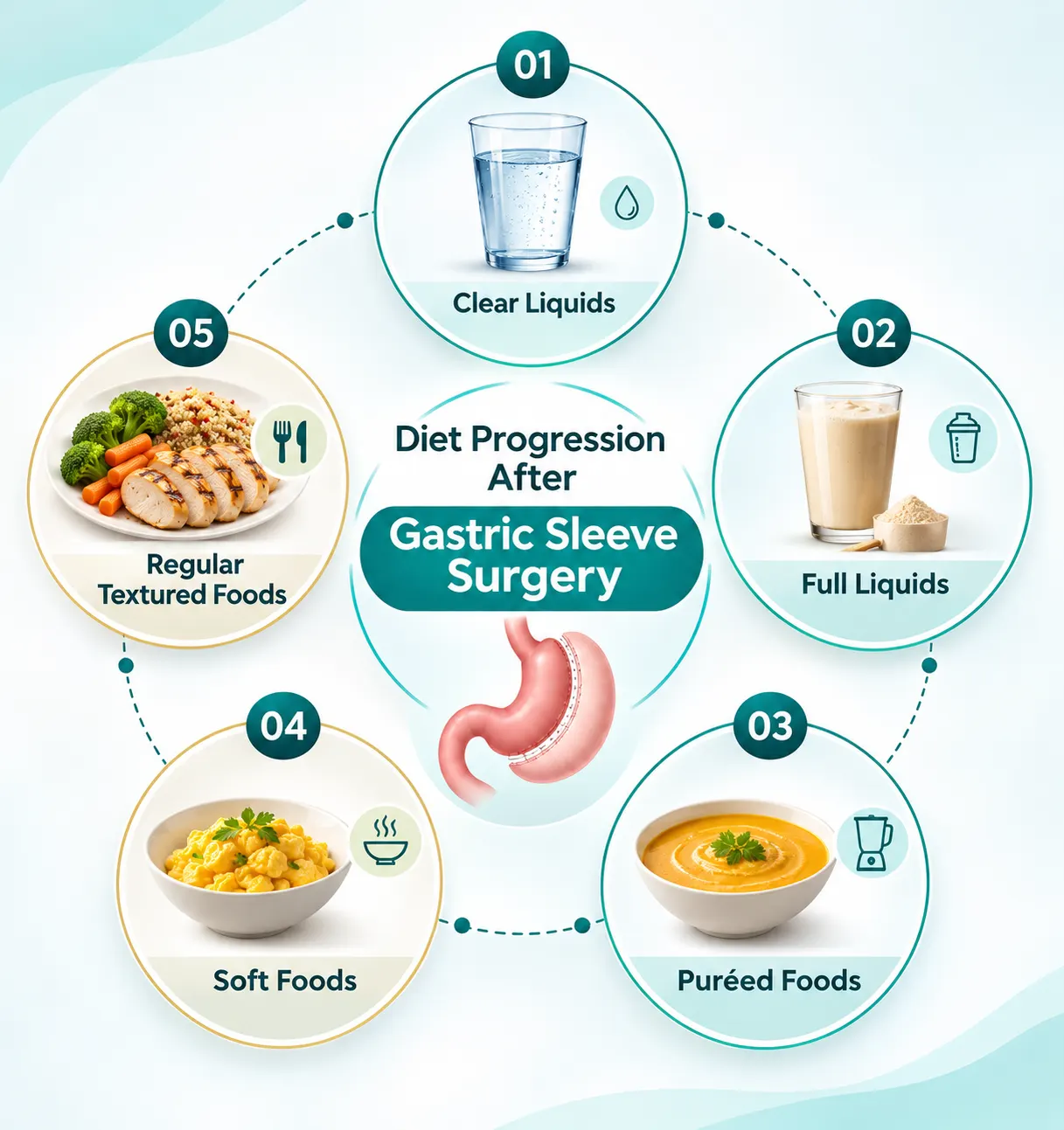
The duration of each stage varies between bariatric programmes. Advancing too quickly can cause nausea, vomiting and discomfort.
Always follow your surgeon’s and dietitian’s instructions before changing food textures.
Hydration and Protein: Two Important Priorities
Hydration: Drinking enough water can be challenging after surgery because your stomach can no longer comfortably accommodate large volumes. Your bariatric team will establish an individual fluid target. Take small sips throughout the day and track your intake.
Dark urine, dizziness and reduced urination may indicate dehydration. Contact your surgical team if these symptoms develop.
Protein: Protein supports tissue healing and helps preserve muscle mass during weight loss. Many bariatric programmes recommend at least 60 grams daily, although individual requirements vary.
Suitable sources may include eggs, lean chicken, fish, low-fat yoghurt and prescribed protein supplements, depending on your current diet stage.
Exercise After Gastric Sleeve Surgery
Movement is encouraged early in recovery, but strenuous exercise should wait until your surgeon confirms that it is safe.
- Hospital stay: Assisted standing and short walks.
- Weeks 1–2: Gentle walking around the home.
- Weeks 3–4: Gradually increase walking duration.
- Weeks 5–6: Consider low-impact activities after clearance.
- Week 7 onwards: Progress towards structured exercise as approved.
Avoid heavy weightlifting, intense abdominal workouts and high-impact exercise until medically cleared.
Follow-Up Care and Warning Signs
Regular follow-ups help monitor surgical healing, nutritional status and long-term progress.
Your postoperative care may include surgical reviews, dietitian consultations, blood tests and prescribed vitamin and mineral supplements. Long-term nutritional monitoring is important after bariatric surgery.
Contact the surgical team promptly if you experience:
- Severe or worsening abdominal pain.
- Persistent nausea or vomiting.
- Inability to keep fluids down.
- Fever or chills.
- Increasing redness or discharge around incisions.
- Reduced urination or signs of dehydration.
- Unusual weakness or rapid heartbeat.
Seek emergency medical attention immediately for chest pain, sudden difficulty breathing, fainting or collapse. These symptoms may indicate serious complications and should never be ignored.
Plan Your Recovery With Dr. Girish Juneja in Dubai
Gastric sleeve recovery requires attention to nutrition, hydration, physical activity and regular medical monitoring. Following your prescribed postoperative plan can help you adjust to the changes and develop sustainable habits.
Dr. Girish Juneja, Laparoscopic and Bariatric Surgeon in Dubai, offers consultations for patients exploring surgical weight-management options.
If you are considering sleeve gastrectomy or preparing for life after surgery, a consultation can help you understand the procedure, recovery requirements and long-term care.
Explore Gastric Sleeve Surgery in Dubai or book a consultation with Dr. Girish Juneja.
Medical Disclaimer & References
This article is for general educational purposes and does not replace individual medical advice. Recovery timelines, dietary progression, nutritional requirements and exercise restrictions vary between patients. Always follow your operating surgeon’s and bariatric dietitian’s instructions.
References:
1. Dubai Health Authority – Standards for Bariatric Surgery Services
2. American Society for Metabolic and Bariatric Surgery – Patient Resources
3. AACE/TOS/ASMBS/OMA/ASA – Clinical Practice Guidelines
4. University College London Hospitals – Life After Gastric Bypass/Sleeve Gastrectomy